COMMUNITY
Germany's children in crisis: Why we as a company are building a community for integration despite government failure
As a Berlin-based entrepreneur at PREA, a real asset boutique specializing in data-driven development of real estate, infrastructure and social projects, I see every day how our city is growing – and where it is failing. Our mission is to create living spaces that offer not only economic but also social added value. This includes affordable housing, educational infrastructure and initiatives that empower vulnerable groups. But at a time when Germany is considered one of the most child-unfriendly countries in Europe, it is not enough to simply analyze or invest. We need to act. In this post, I share our latest charity campaign and why, despite grim realities, we are building a community that is creating change from the bottom up.
A shocking truth about Germany
Imagine this: A country known for engineering prowess and prosperity ranks 25th out of 43 OECD and EU countries in UNICEF’s child well-being ranking – a drop from 14th place in 2020. Children in Germany report declining life satisfaction, poorer school performance and higher poverty. More than one million children lack basic needs such as hot meals or adequate clothing. And a survey shows that 39% of adults do not consider Germany to be a child-friendly country. In fact, it is probably one of the least child-friendly countries in the world, if you look at global comparisons. Refugee children who arrive in Berlin and find themselves stranded in a bureaucratic and social desert are particularly affected.
A state failure at all levels
The present looks bleak – and not just in terms of statistics. Politicians and local authorities are failing across the board when it comes to integrating refugee children. Thousands of children from crisis areas live in Berlin, newly arrived and struggling with language barriers, cultural shocks and a lack of support. Studies show that ethnic diversity can promote social integration, but without targeted measures it remains ineffective. “Vertical integration” – that is, deep involvement in all levels of society, from education to culture to everyday life skills – is crucial here. In Germany, this means that refugee children should not only end up in welcome classes, where the focus is primarily on language, but in comprehensive programs that build social bonds, practical skills and emotional stability.
But the reality? Since the wave of refugees in 2015-16, Germany has made no progress, instead degrading itself in your own culture. In Berlin, where over 70,000 Ukrainian refugees live, resources are often lacking. Children aged 0 to 10 fresh from war or crisis zones not only need time, but also the right plan to adapt –
the woke-mind virus in our school system is the reason for frustration later on. Local initiatives such as grassroots organizations are helping, but the state is lagging behind: a lack of places in daycare centers and schools, an outdated learning system, insufficient funding for social infrastructure, bureaucratic hurdles and active counter-movements by state-funded NGOs make integration a lottery game. Poverty hits refugee families and locals equally hard, and without intervention, the cycle of exclusion is perpetuated.
As an entrepreneur, I would like to look positively to the future: “Things are getting better, the market is regulating itself, innovations are solving everything.” But I’m wrong. This optimism ignores the systemic deficits. Instead, we have to take a negative – or rather realistic – view of the future. The crisis will worsen if we don’t intervene. And that is exactly the right thing to do: recognize that the state is failing and take private initiatives.
A charity campaign that combines fun and learning
At PREA, we believe in regional responsibility. That’s why we recently organized a charity campaign in cooperation with the Nano Kids Club Berlin and Restaurant 136. The Nano Kids Club is a lively place in Berlin that offers 300 m² of indoor playgrounds, craft rooms, sports areas and a parents’ lounge – especially for vulnerable families, including Ukrainian refugees. Here, not only children find care, but also mothers find support and community.
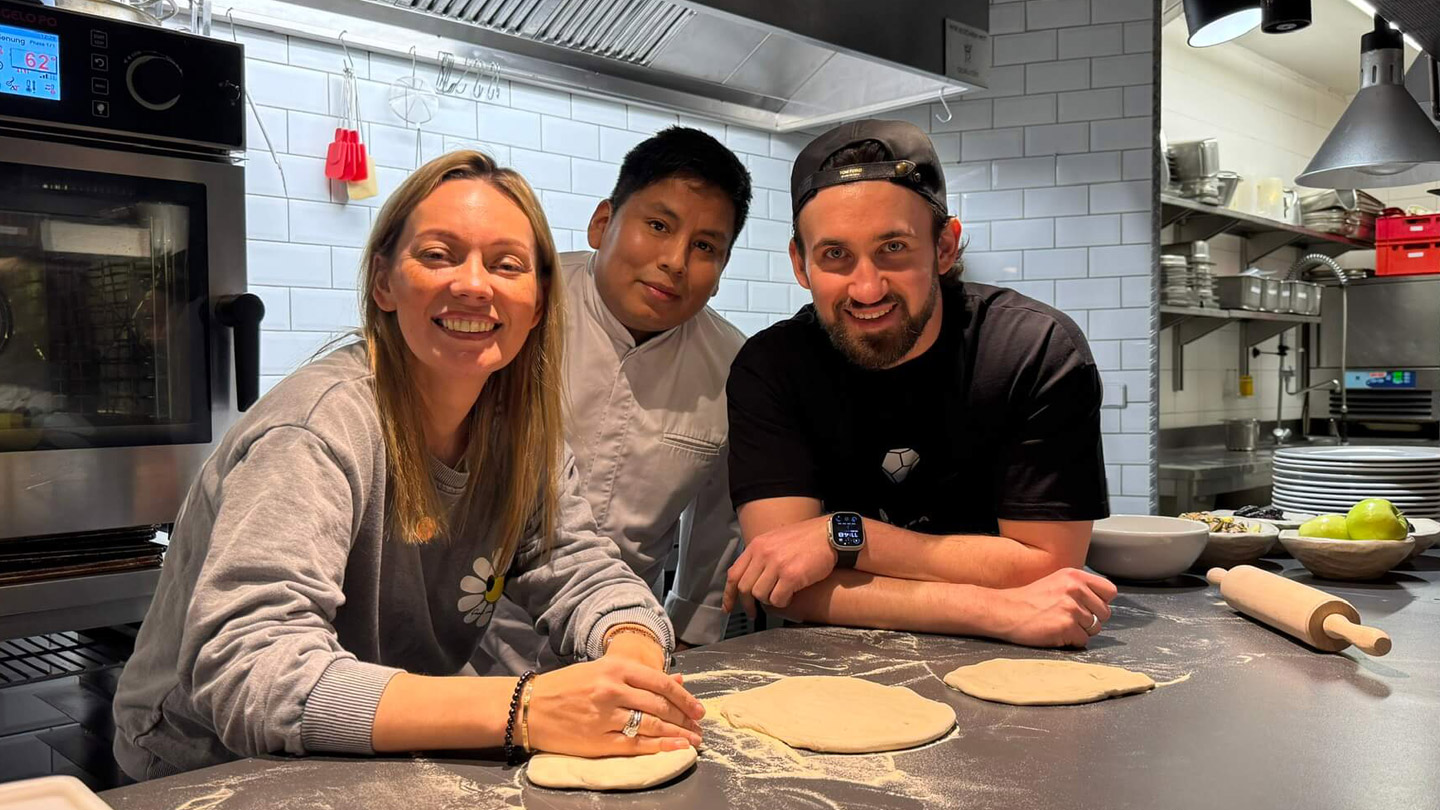
Together with Peruvian star chef Matias Diaz Silva, the founder of Restaurant 136 – known for its innovative Italian-Peruvian fusion cuisine – we organized an event for a group of refugee children aged 4 to 10. Matias, who himself comes from Peru and is building a culinary bridge in Berlin, led an interactive cooking workshop. The children not only learned how to cook independently – from simple dishes to Peruvian national drinks – but also practiced German in a playful way. Phrases such as “cut the apple” or “knead the dough” were combined with laughter and experiments.
The event was more than just an afternoon: we supported with active investments, but above all with our own hands. The children, many of whom had only recently arrived in Germany, communicated effortlessly in German, built up their self-confidence and made friends. It was an example of vertical integration in action: cultural exchange through food, practical skills for everyday life and social bonding in a safe environment. We not only strengthened the Nano Kids Club, but also showed how companies can close gaps.


From gloom to community-driven change
This campaign underlines why PREA is committed to Berlin: We prioritize regionality, child development and social impact. In a city that is growing but forgetting its most vulnerable, we give back – through projects such as affordable housing and social infrastructure. But a realistic view shows that positive optimism alone is not enough. If we are wrong and assume that the state will fix it, we lose time. Instead, we take a negative view of the future – recognizing the ongoing failures – and we are right: only private and community-based initiatives can bring about change.
That’s why we at PREA are building a community in Berlin. A network of entrepreneurs, educators, chefs and families that promotes integration despite the failure of the state. Events like this are the beginning: they make Berlin a better place to live, promote diversity and create long-term added value. Ethnic diversity strengthens us all, as studies show.
Become part of our community
If you want to change the gloomy reality, join us. Share your ideas, support the Nano Kids Club or contact me directly at X or Instagram or via the company website. Let’s organize more events -> for a more child-friendly Berlin. Visit us regularly and subscribe to our newsletter for updates.
Together, we can have a positive impact despite everything - because we acknowledge the negativity and take action.
Note: This article is based on our experience and current studies. For more photos and videos from the event, follow us on social media.
Author

Gabriel Khodzitski
Share article
About PREA
PREA is an integrated real asset platform with a focus on sustainable real estate, energy and digital infrastructure projects. The company markets, develops and implements complex projects along the entire value chain – from analysis and planning to financing, construction and operation. PREA is considered one of the most innovative consulting firms in Germany and combines strategic consulting with operational implementation expertise.
Our mission is to co-create living spaces that offer significant economic and social added value for investors, owners, and users.
PREA is a brand of PREA Group GmbH.
Press contacts
Recommended Articles